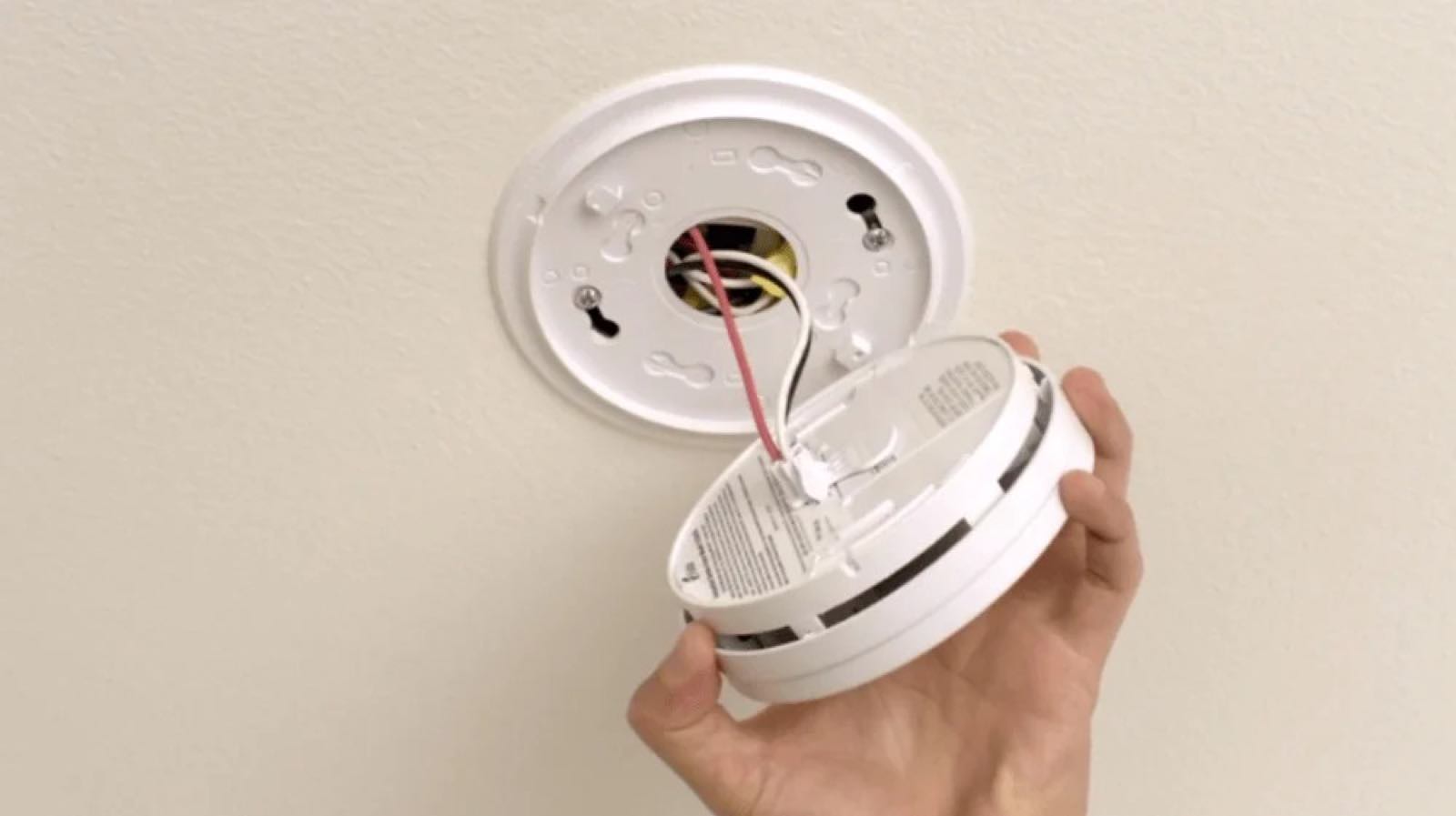
We design and install interlinked smoke alarm systems to BS 5839-6 for London rentals and HMOs: Grade D1 mains-powered alarms with sealed backup, heat alarms in kitchens and CO alarms wherever combustion appliances sit. One accountable contractor handles the survey, the NICEIC electrical work and the certificate — so landlords, letting agents and homeowners meet the 2022 regulations and borough licensing conditions without juggling three trades.
Written Guarantee: 5 Years
|
Average Timeline Range: 1 - 2 days
Grades Explained, and What London Landlords Actually Need
BS 5839-6 grades domestic alarm systems by power supply and resilience, and the grade is where most confusion — and most non-compliance — starts. Grade D1 means mains-powered alarms with a sealed, tamper-proof ten-year backup battery, and it is the standard specification for rented property and the grade London HMO licensing conditions overwhelmingly demand. Grade D2 uses replaceable backup batteries; battery-only Grade F sits below both; Grade A panel systems with separate detectors, sounders and a control panel sit above, appearing in larger HMOs and communal areas of converted blocks.
We install Grade D1 as our default for landlords because it removes the failure mode councils see most across the boroughs: dead, removed or forgotten batteries. A sealed ten-year cell cannot be pinched for the TV remote. Once the alarms are interlinked, every unit sounds the moment any single one triggers — the feature that gets a sleeping tenant on the top floor of a Victorian terrace out of the building when something ignites in the basement kitchen. For a homeowner in a period house the same logic applies: a hush of separate beeps two rooms away wakes nobody, while an interlinked system turns the whole house into one warning.
LD1, LD2 and LD3 Coverage — How Much of the Property Is Watched
The same standard defines coverage as well as grade, and the two are quoted together — a compliant spec reads, for example, “Grade D1, LD2”. LD3 covers escape routes only: the hallways and landings people move through to get out, and it is the minimum for an ordinary single-household rental. LD2 adds detection in higher-risk rooms — a heat alarm in the kitchen, plus the principal living room and any room where a fire is statistically likely to start. LD1 covers virtually every room and is specified for higher-risk HMOs and larger house shares.
Most London boroughs require at least Grade D1 to LD2 in licensed HMOs, with a heat alarm rather than a smoke alarm in the kitchen so cooking does not cause the constant false alarms that make tenants rip units off the ceiling. We confirm the coverage level your licence conditions or fire risk assessment actually require before quoting — an Islington additional-licensing HMO and a single-family let in the same street have very different specs. Then we position each alarm exactly where the standard says: on the ceiling, at least 300mm clear of walls, corners and light fittings, and away from the bathroom door where steam causes nuisance triggers.
The 2022 Regulations, CO Alarms and the £5,000 Fine
The Smoke and Carbon Monoxide Alarm (Amendment) Regulations 2022 tightened the baseline every private landlord in England must meet, and enforcement across London boroughs has followed. You must provide at least one smoke alarm on every storey used as living accommodation, and a carbon monoxide alarm in any room with a fixed combustion appliance — gas boilers, gas fires and wood burners are all caught, though gas cookers are specifically excluded. The alarms must be working at the start of every new tenancy, and you must repair or replace any alarm a tenant reports faulty as soon as reasonably practicable. Local authorities can serve a remedial notice and fine up to £5,000 per breach.
Note the gap this leaves: the 2022 regulations are a floor, not the HMO standard. A licensed HMO in Newham or Brent will almost always be held to a full Grade D1 interlinked system under its licence conditions, well beyond the single-alarm-per-storey minimum. We fit CO alarms to BS EN 50291 alongside the smoke system, sited correctly relative to each appliance, and record every device — type, location, serial number and test result — on a certificate your managing agent can file against the tenancy and produce on demand.
Radio-Interlinked or Hard-Wired — Choosing for London Stock
Interlinking runs one of two ways: through a dedicated interconnect cable wired between the alarms, or by radio frequency, with each unit paired wirelessly. Both are permitted under BS 5839-6 and both are accepted by London licensing officers, so the right choice is dictated by the property, not by habit.
Where a property is already open for refurbishment — floorboards up, walls stripped in an Edwardian conversion — wiring the interconnect costs little and is effectively bulletproof; we run it while the fabric is exposed. In an occupied let or a recently decorated mansion-block flat, radio-interlinked Grade D1 alarms are almost always the sensible answer: each unit still takes its mains power from a local spur, but the link between them is wireless, so we avoid chasing cable through finished plaster and leaving you to redecorate every room to add one head. The trade-off is a modest per-unit surcharge and a battery in the RF module to track. Whichever route suits the building, the mains work is carried out and certified by our NICEIC-registered electricians to BS 7671, and we leave the system tested with every alarm triggering every other — the check that matters, photographed for the file.
How to Choose the Right Smoke Alarm System for Your Property
Start with the document that governs the property, not the product catalogue. If it is a licensed HMO, your licence conditions and fire risk assessment set the grade and coverage — usually Grade D1 to LD2 or LD1 — and there is no discretion to fit less. If it is an ordinary single-household rental, the 2022 regulations set the floor, but interlinked Grade D1 to LD3 is the sensible, defensible choice and costs little more than doing the bare minimum twice.
Then weigh four practical criteria. First, occupation: an empty property mid-refurbishment favours hard-wired interlink; an occupied or freshly decorated one favours radio. Second, tenure: leaseholders in ex-LA and mansion blocks should check whether new cabling needs a freeholder licence to alter before committing. Third, the kitchen: insist on a heat alarm there, never smoke, whatever a cheap quote says. Fourth, evidence: choose a contractor who issues a BS 5839-6 certificate and a BS 7671 electrical certificate as standard, because an HMO officer or an insurer will ask for both. Beware anyone quoting a single flat per-unit price without a survey — coverage level, access and existing wiring genuinely change the figure, and a fixed written quote after a look-round protects you from the mid-job surprise.
Installation, Testing and the Paperwork Councils Expect
A smoke alarm system is only compliant while it is proven to work, and the proof is as much part of the job as the hardware. On the day, our electricians fix each alarm to the ceiling in its correct position, wire and certify the mains circuits to BS 7671, pair or connect the interlink, and then commission the whole system — triggering each head in turn to confirm every other alarm in the property sounds. That interlink test is the single most important check, and we photograph it rather than merely tick a box.
You receive a BS 5839-6 installation certificate listing every device by type, location and serial number, the electrical certificate for the new circuits, and a test log to continue. Landlords and agents should keep this with the tenancy file and record the start-of-tenancy test at each new let. Ongoing, tenants handle the routine push-button checks, but we offer scheduled annual service visits for portfolio landlords and managing agents who would rather we ran the regime, re-testing every device and reissuing paperwork formatted the way borough licensing officers expect to receive it. The whole installation is covered by our written guarantee.
Working With Landlords, Letting Agents and HMO Portfolios
Most of our alarm work is for landlords and letting agents managing property across the London boroughs, and the value we add is being one accountable contractor rather than a subcontractor you have to chase. Hand us the address and the licence conditions and we survey, design to the required grade and coverage, do the NICEIC-registered electrical work and issue the certification as a single package — no coordinating an electrician, a fire consultant and a handyman separately, and no gaps between them where compliance falls through.
For agents onboarding a new managed property, an alarm survey flags exactly what a unit needs before the first tenancy, so you are not discovering a failure at check-in. For portfolio landlords we run rolling programmes — bringing older Grade F or hall-only systems up to Grade D1 across a block of flats or a street of terraces on a schedule that fits void periods. Where the alarm system sits alongside fire doors, emergency lighting or wider HMO compliance works, we can deliver the lot under one contract and one written guarantee, which is usually faster and cheaper than piecing the trades together. Access, parking and tenant liaison are handled by us, with appointments booked around occupants rather than left to chance.
What Interlinked Smoke Alarm Systems Costs in London (2026)
Item
Typical London Price
Notes
Grade D1 mains alarm, supplied and fitted
£80–£150 per unit
Smoke or heat head; lower where a suitable spur already exists, higher where a new circuit is chased in.
Carbon monoxide alarm to BS EN 50291
£45–£90 per unit
Positioned to the appliance in boiler cupboards, rooms with a gas fire or wood burner; gas cookers excluded.
Landing and bedroom smoke heads, kitchen heat alarm and CO alarms to appliance rooms, interlinked and tested.
Two-bed flat, Grade D1 LD2 upgrade
£350–£650 per property
Ex-LA and mansion-block flats where alarms are hall-only or battery-only and need bringing up to standard.
Radio-interlink surcharge vs wired
£15–£35 per unit
Wireless RF pairing avoids chasing interconnect cable through decorated walls in occupied lets.
Grade A panel system for larger HMO
£1,800–£4,500 per property
Control panel, sounders and manual call points where the fire risk assessment specifies Grade A over Grade D1.
Alarm system survey and design report
£120–£220 per visit
Coverage level checked against your licence conditions or FRA; credited against the works if you proceed.
Annual test, service and re-certification
£90–£180 per property
Function test every device, log the result and reissue paperwork for the tenancy or council file.
Prices are indicative Greater London ranges for 2026, plus VAT where applicable, and are fixed in writing after a survey — access, existing wiring and coverage level all move the figure.
Insider Tips Before You Commit
Specify Grade D1 with sealed ten-year batteries from the outset — councils fail more systems for dead or removed backup cells than for anything else.
Put a heat alarm, never a smoke alarm, in the kitchen, or tenants will disable the whole interlinked system the first time they burn toast.
In an occupied or freshly decorated let choose radio interlinking so you avoid chasing cable and redecorating every room to add one alarm.
Ask for the BS 5839-6 certificate listing every device by type, location and serial number — a bare invoice will not satisfy an HMO officer.
Fit CO alarms at head height on the wall roughly one to three metres from a boiler or fire, not on the ceiling directly above it.
If your flat is leasehold, check whether chasing new mains cabling needs the freeholder’s licence to alter before the electrician starts.
Test interlink by triggering one alarm and confirming every other sounds — insist the installer photographs this, as it is the check inspectors care about.
Keep the handover certificate and test log with the tenancy file; you must prove the system worked at the start of every new let.
How Not to Get Scammed
London has more rogue traders than any other UK market. These are the warning signs we see most often — and exactly what to do when you spot them.
Fits standalone battery alarms and calls the property compliant, with no mains supply and no interlink between units.
Confirm in writing that the system is Grade D1 mains-powered and interlinked to BS 5839-6; battery-only Grade F rarely meets HMO conditions.
No BS 5839-6 certificate or BS 7671 electrical certificate — just a handwritten receipt or a verbal all-clear.
Refuse to pay the final balance until you hold the signed certificate and NICEIC minor works or installation cert for the new circuits.
Non-electrician wiring mains alarms into a new circuit with no qualification to self-certify the work.
Ask which competent-person scheme they are registered under; mains alarm circuits must be certified to BS 7671 by a registered electrician.
Cash-only, large deposit up front, and no VAT invoice for a job priced in the hundreds.
Pay by card or transfer against a written fixed quote with staged payment on completion; keep the VAT invoice for your records and the council file.
Mid-job “we found more problems” pressure, quoting a far bigger rewire before they will finish the alarms.
Get any extra works separately quoted in writing and, for anything significant, seek a second opinion before authorising more spend.
Claims public liability cover but cannot produce a certificate when you ask.
Ask to see the £5m public liability certificate before work starts — uninsured labour drilling near mains and gas is a real risk to your property.
Standards & Compliance
Every project is delivered to current British Standards and Building Regulations, with works documented for building control and HMO licensing sign-off — backed by fixed written quotes and a written guarantee.
BRITISH STANDARDS · BUILDING REGS COMPLIANT · FD30/FD60 FIRE DOORSETS · BS 5839-6 ALARMS · WRITTEN GUARANTEE
Frequently Asked Questions (FAQ)
How much does interlinked smoke alarm installation cost in London?
Typically £80–£150 per Grade D1 alarm installed, depending on access and whether suitable wiring already exists. A typical three-storey HMO system — smoke alarms to landings and bedrooms, a heat alarm to the kitchen and CO alarms to appliance rooms — usually lands between £600 and £1,500 fully certificated. A smaller two-bed flat upgrade often sits between £350 and £650. Every figure is fixed in writing after a survey.
What do the 2022 alarm regulations require of landlords?
The Smoke and Carbon Monoxide Alarm (Amendment) Regulations 2022 require a smoke alarm on every storey with living accommodation and a CO alarm in every room with a fixed combustion appliance — gas cookers excluded — working at the start of each tenancy and repaired or replaced promptly when reported faulty. Fines run to £5,000 per breach. HMO licensing typically demands more, usually a full Grade D1 interlinked system to LD2 or LD1.
Do I need a heat alarm in the kitchen?
For LD2 coverage and in licensed HMOs, yes — a heat alarm rather than a smoke alarm, because cooking triggers constant false alarms on smoke sensors and tenants respond by removing them. The heat alarm interlinks with the rest of the system so the whole property still sounds together. Fitting a smoke head in a kitchen is one of the quickest ways to end up with a disabled system and a licensing failure.
Are radio-interlinked alarms acceptable for HMO licensing?
Yes — BS 5839-6 permits radio interlinking, and London councils accept radio-linked Grade D1 systems, which still take mains power at each alarm. They are usually the right answer in occupied or freshly decorated properties, where chasing interconnect cables through finished walls would mean redecorating every room. In a property already stripped for refurbishment, hard-wired interlink is simpler and we fit that instead.
What is Grade D1 and why does it matter?
Grade D1 means mains-powered alarms backed by a sealed, tamper-proof ten-year battery, and it is the grade London HMO licensing conditions overwhelmingly require. The sealed cell removes the commonest failure councils find — batteries that are flat, missing or borrowed for something else. Grade D2 uses replaceable batteries and battery-only Grade F sits lower still; both are far more likely to fail an inspection than a properly installed Grade D1 system.
How long does installation take and is my guarantee in writing?
A typical installation takes one to two days depending on property size, coverage level and whether we are wiring new circuits or fitting radio-interlinked units. Occupied flats are usually done inside a day. The work carries a written five-year guarantee covering the installation, and you receive a BS 5839-6 certificate plus a BS 7671 electrical certificate on completion for your records and the council file.
Do the alarms need to be fitted by a qualified electrician?
For mains-powered Grade D1 alarms, yes. Wiring alarms into new or existing circuits is electrical work that must be certified to BS 7671, and our installations are carried out by NICEIC-registered electricians who self-certify the circuits. A general handyman fitting battery-only units and calling it compliant is a common shortcut that leaves you exposed at a licensing inspection or an insurance claim.
Where should carbon monoxide alarms go?
A CO alarm is required in any room with a fixed combustion appliance — a gas boiler, gas fire or wood burner, but not a gas cooker. It should sit at head height on a wall roughly one to three metres horizontally from the appliance, or as the manufacturer specifies, not on the ceiling directly above it. We fit CO alarms to BS EN 50291 alongside the smoke system and record each on the certificate.
My flat is leasehold — can I still upgrade the alarms?
Usually yes, but check your lease first. Fitting radio-interlinked Grade D1 alarms rarely disturbs anything structural, but running new mains cabling can count as an alteration needing the freeholder’s or managing agent’s licence to alter, particularly in mansion blocks and ex-LA flats. We can advise on a specification that keeps disruption minimal, and we will flag anything that looks likely to need consent before we start.
Can you upgrade a whole block or portfolio at once?
Yes. We run rolling programmes for portfolio landlords and letting agents, bringing older Grade F or hall-only systems up to Grade D1 across a block of flats or a street of terraces on a schedule built around void periods and tenant access. Where alarms sit alongside fire doors, emergency lighting or wider HMO compliance works, we deliver the lot under one contract and one written guarantee, which is usually faster and cheaper than separate trades.
Our Written Guarantee
We provide a fully comprehensive, written 5-Year guarantee covering all structural reinstatement, moisture boundaries, and finish coatings.
100% Insurance Protected
Request an Elite Assessment
Secure a rapid, high-precision physical survey by our team. Fill out our briefing engine instantly.
Interlinked Smoke Alarm Systems Across Greater London
We deliver interlinked smoke alarm systems across all 33 London boroughs — from the City and Central London out to the M25. Tap any marker to see coverage and local postcodes.