Fire Risk Assessment Remedial Works: 2026 Cost Guide
Updated 12 June 2026|8 min read
Actioning a fire risk assessment for a typical London HMO or small block costs £1,500–£10,000 in 2026, depending on how many doors, alarms and compartmentation defects the action plan lists. Most plans contain the same recurring items, fire doors, fire-stopping, alarm upgrades, emergency lighting and signage, and each is priced below. This guide explains priority ratings, who is competent to do each item, and the certification you need to close the plan off for the council and your insurer.
What an FRA action plan actually contains
A fire risk assessment ends in two things: the significant findings, and an action plan listing what must change, usually with a priority and a timescale against each item. The action plan is the part that costs money, and across hundreds of London HMOs and blocks the same entries recur with remarkable consistency.
Doors lead the list: fire doors missing where the escape route needs them, existing doors without seals or closers, gaps beyond tolerance, and flat entrance doors that were replaced over the years with ordinary doors.
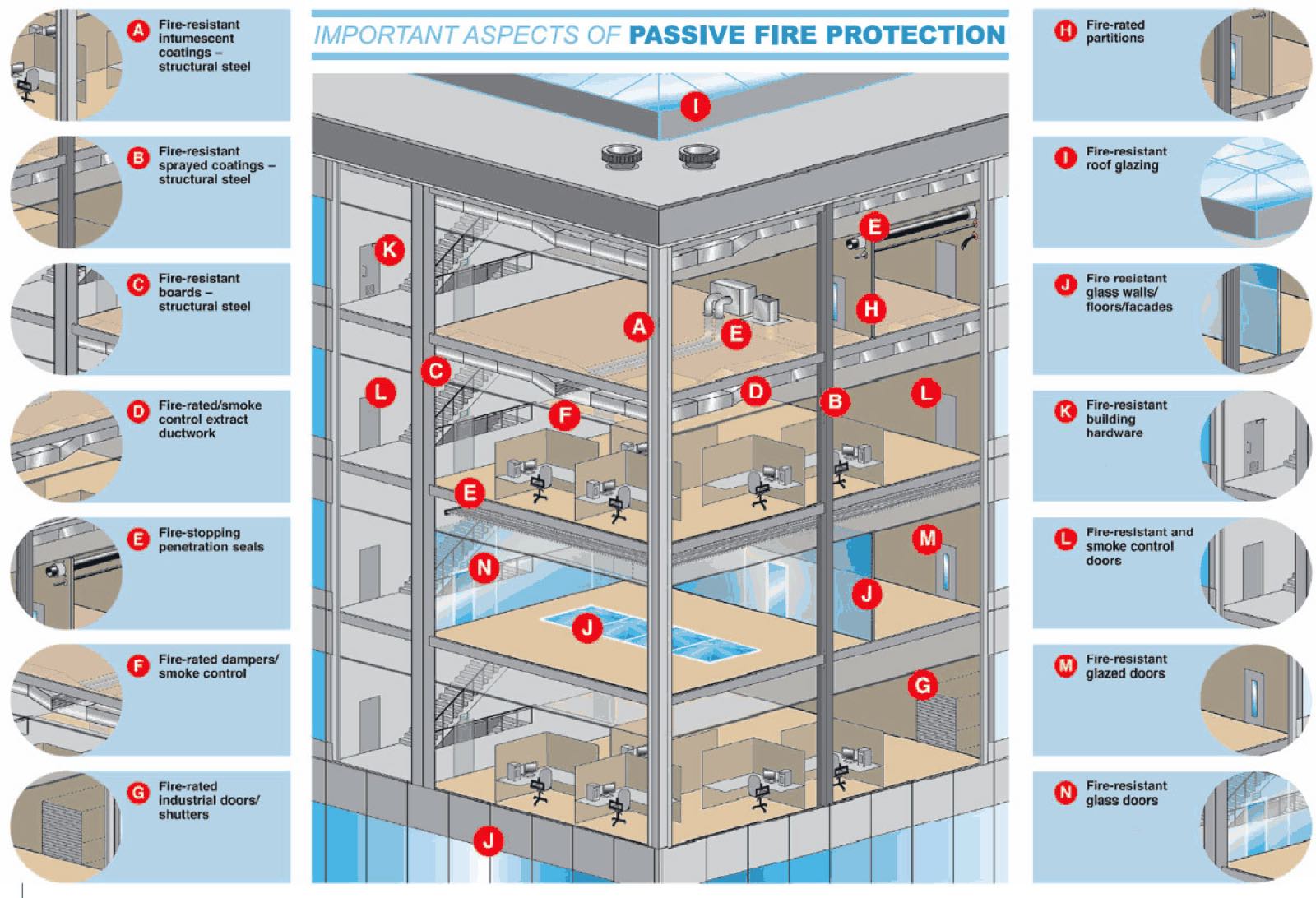
Compartmentation comes next: breaches in the walls and ceilings that are supposed to box fire in, from missing sections of plasterboard above suspended ceilings to lofts that run open across the whole terrace.
Fire-stopping is the small-bore version of the same problem: holes drilled for pipes, cables and waste runs through fire-rated walls and floors, never sealed.
Then detection and alarm shortfalls, emergency lighting gaps on escape routes, missing or wrong signage, and housekeeping items such as storage on escape routes and unsecured cupboards housing electrical intake equipment.
If your action plan reads like that list, it is normal, and every line of it is priceable.
Priority ratings: what order to do the works in
Assessors grade each finding, typically as high, medium or low priority, or on a numbered scale, with a recommended timescale: immediate action for intolerable risks, one to three months for significant ones, and six to twelve months or next refurbishment for the rest.
Take the ratings literally. High-priority items, a propped-open fire door on the only staircase, a dead alarm system, an escape route used as bicycle storage, are the findings that turn into enforcement notices when a fire officer or licensing inspector visits, and into liability if there is an incident in the meantime. They are also frequently the cheapest items on the plan, which removes any excuse for sequencing them last.
The trap to avoid is cherry-picking: clearing the easy low-priority items because they were convenient while the expensive high-priority compartmentation work waits. A part-completed action plan with the serious items outstanding looks worse to an inspector, an insurer and a court than an untouched one that is two weeks old, because it proves you read the assessment and chose differently.
Plan the works in priority order, record completion dates against each item, and if budget forces phasing, phase by priority, never by convenience.
Typical remedial costs in 2026
The table below prices the recurring action plan items at 2026 London rates. Quantities drive everything: a plan listing two door upgrades and signage is a few hundred pounds, while a plan listing eight doorsets, loft compartmentation and a Grade A alarm system is a five-figure project.
For orientation, a typical five-bedroom HMO action plan, a mix of door upgrades, two or three new doorsets, alarm additions, a small emergency lighting system and fire-stopping, lands at £3,000–£8,000 all-in. A small converted block of four to six flats with communal areas commonly runs £5,000–£15,000 once flat entrance doors and riser fire-stopping are included.
Get the plan priced as a whole rather than item by item, because the items share access, scaffold towers, parking and making good, and a contractor pricing the lot will sharpen every line. The figures below are supply-and-install, including reasonable making good but excluding redecoration of whole areas.
Remedial item
Typical cost (2026)
Certified FD30 doorset, fitted
£400 – £900
Upgrade existing fire door (seals, closer, gaps)
£150 – £350
Fire-stopping, per service penetration
£40 – £150
Compartmentation repairs (loft, riser or ceiling breaches)
£500 – £3,000
Grade D1 interlinked alarm, per unit
£80 – £150
Grade A alarm system, small HMO or block
£2,000 – £6,000
Emergency light fitting, installed
£250 – £450
Fire safety signage, per sign
£10 – £30
Who can carry out the works
Fire safety remedials are competence-sensitive, because most of the work is invisible once finished and only performs in a fire, so who does it matters as much as what is done.
Fire doors should be fitted or upgraded by installers who understand the certification rules: a doorset's rating depends on the frame, gaps, ironmongery and seals being right, and an FD30 leaf hung carelessly in an old frame is not an FD30 door. Third-party certificated installers are the gold standard and increasingly what block insurers ask about.
Fire-stopping must use tested products matched to the penetration: intumescent sealants, collars for plastic pipes, batt and mastic for riser openings. The orange-expanding-foam school of fire-stopping fails surveys on sight, and a photo of each completed seal is the cheap habit that proves the work forever.
Alarm and emergency lighting works are electrical installations certified by competent electricians to BS 5839-6 and BS 5266-1 respectively, with commissioning certificates issued at handover.
None of this requires exotic specialists for a normal HMO or small block; it requires a contractor who treats the paperwork as part of the job rather than an annoyance after it.
The paperwork: closing the plan off properly
Remedial works are not finished when the dust settles; they are finished when the evidence file closes the loop, because the action plan is a live document that councils, fire authorities and insurers read.
The pack should contain: completion certificates for each system, alarm commissioning to BS 5839-6, emergency lighting to BS 5266-1, electrical certification for the wiring behind both; doorset certificates and photographs of certification labels for every new or upgraded door; photographs of each fire-stopping seal and compartmentation repair taken before anything was boxed in or decorated over; and dated invoices describing the works item by item against the action plan references.
Then update the assessment itself: each action marked complete with a date and evidence reference, so the FRA shows a closed plan rather than an open one. For licensed HMOs, send the pack to the licensing case officer; it shortens every future inspection.
This file is also precisely what a loss adjuster requests after a fire, and the difference between a documented, completed action plan and a verbal assurance that the works were done is, bluntly, the difference between a paid claim and a contested one.
One contractor or four trades?
Look back at the action plan items: doors are a joiner, fire-stopping is a specialist or skilled builder, alarms and emergency lighting are an electrician, and the making good afterwards is a decorator. Run as separate appointments, a modest action plan becomes a coordination project, four quotes, four schedules of tenant access, four sets of parking and making-good arguments, and weeks of elapsed time while each trade waits on the last.
The single-contractor route compresses that: one survey pricing the whole plan, one mobilisation, trades sequenced day by day, and one accountable party if anything is missed, which matters when the missed item is a concealed fire seal rather than a paint run.
It is also cheaper in practice. Shared access and preliminaries typically save 10–20% against the sum of separate trade quotes on plans in the £3,000–£10,000 range, and the certification pack arrives as one document set instead of four formats.
We action complete FRA plans across London HMOs and small blocks on exactly this model: one fixed quote against the assessor's plan, works in priority order, and the closed-off evidence pack at the end. If an action plan is sitting in your inbox, call 020 3006 8834 and we will price it line by line.
Frequently Asked Questions
How much does it cost to action a fire risk assessment?
A typical five-bedroom London HMO action plan costs £3,000–£8,000 in 2026, covering a mix of fire door works, alarms, emergency lighting and fire-stopping. Small converted blocks run £5,000–£15,000 once flat entrance doors and riser fire-stopping are included. Light plans with a couple of door upgrades and signage can be under £1,000.
Do I have to complete every item on the FRA action plan?
Yes, within the recommended timescales: immediate for high-priority items, one to three months for significant ones, and six to twelve months for the rest. Cherry-picking easy items while serious ones wait looks worse to inspectors and insurers than a plan being worked through in priority order.
Who is allowed to fit fire doors and do fire-stopping?
Competent contractors, with third-party certificated fire door installers as the gold standard. Fire-stopping must use tested products matched to each penetration, intumescent sealants, pipe collars, batt and mastic, never general expanding foam, and every seal should be photographed before it is concealed.
What certificates do I need after the remedial works?
Alarm commissioning to BS 5839-6, emergency lighting certification to BS 5266-1, electrical certificates for the associated wiring, doorset certificates with photos of the labels, photographic evidence of fire-stopping, and itemised invoices referenced to the action plan. The fire risk assessment is then updated to show each action closed with a date.
How often should a fire risk assessment be reviewed?
Review it annually as good practice, and immediately after any material change: building works, a change in occupancy or layout, or a fire incident. For licensed HMOs, boroughs commonly expect the review rhythm and the completed action plan to be evidenced at inspection.