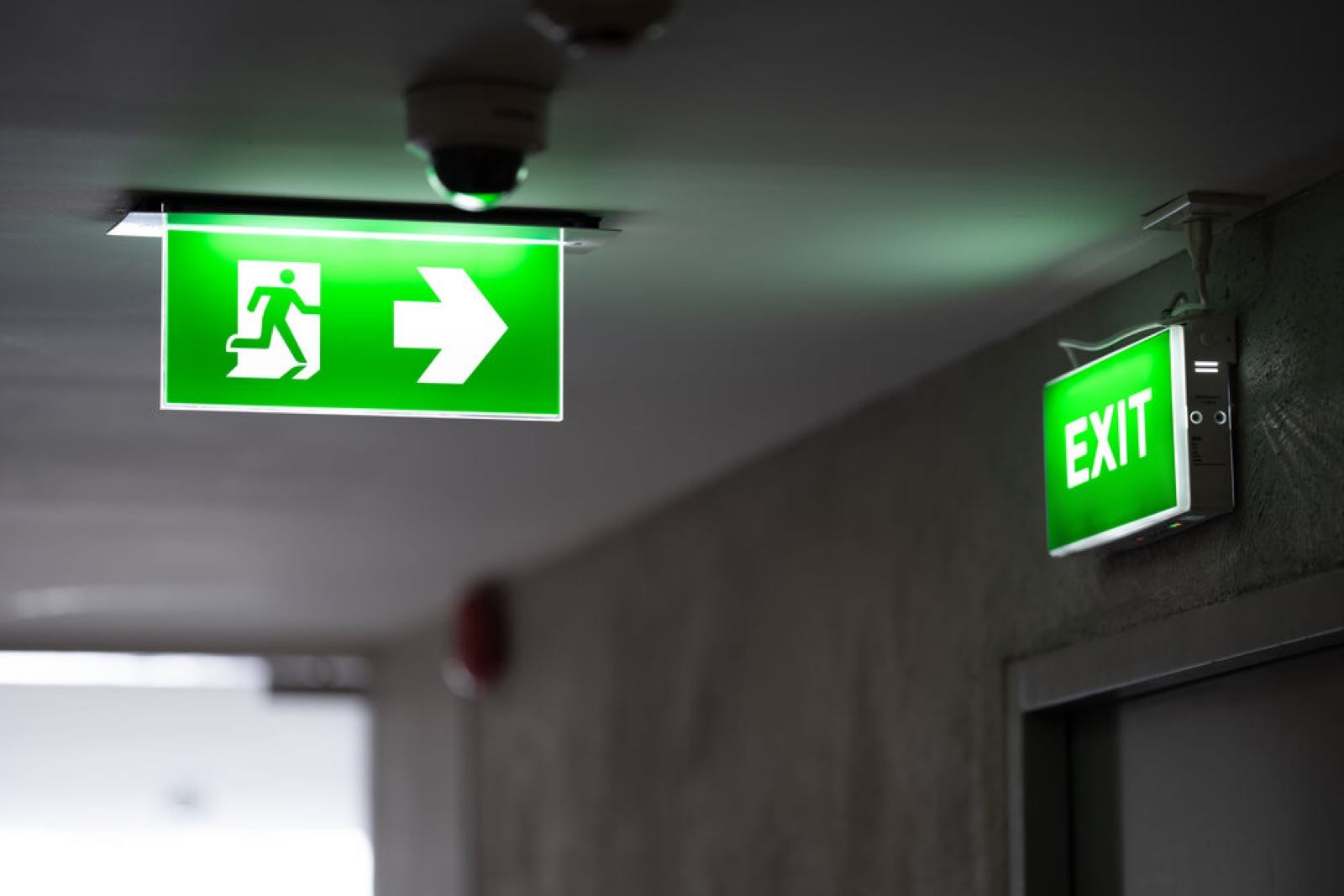
Emergency Lighting Requirements for HMOs: 2026 Guide
Updated 12 June 2026|8 min read
Not every HMO needs emergency lighting, but many London licensing officers will require it: the test is whether tenants could escape safely if the electricity failed at night. HMOs of three or more storeys, properties with long or complex escape routes, and staircases with no borrowed light will normally need a system designed to BS 5266-1. Budget £250–£450 per fitting installed, or £800–£2,000 for a complete small-HMO system at 2026 prices.
Do HMOs need emergency lighting?
There is no blanket rule that says every HMO must have emergency lighting, and anyone telling you otherwise is selling fittings. The requirement is risk-assessment driven, anchored in the LACORS housing fire safety guidance that London boroughs use as their benchmark.
The question the guidance asks is simple: if the power failed during a fire at night, could occupants find their way out safely? In a small two-storey shared house with a straightforward staircase and decent borrowed light from street lamps through landing windows, the answer is often yes, and conventional lighting with well-placed switches is accepted.
In a three-storey HMO with a winding staircase, internal corridors with no windows, or a basement letting room, the answer is usually no, and emergency lighting becomes a licence condition.
The decision is recorded in the fire risk assessment and reflected in your HMO licence conditions, which trump any general advice. If your borough has written emergency lighting into the conditions, the rest of this guide tells you what the system involves, what it costs, and how to keep it compliant year after year.
When emergency lighting is required
Across the London licensing inspections we do remedial work for, the same triggers come up again and again.
Three storeys or more is the most reliable one: taller HMOs mean longer escape routes, more occupants and more time spent on stairs in an emergency, so most boroughs expect emergency lighting in three-storey-plus HMOs as standard.
Escape routes without borrowed light come next. A staircase or corridor with no windows, or one that gets no useful spill from street lighting, is pitch black in a power cut. Officers visit in daylight but they know what the building is like at 2am.
Complex layouts matter too: changes of direction, steps within corridors, split-level landings and any route where a stranger to the building could hesitate. Basement rooms, large HMOs with many occupants, and buildings where the escape route passes through risk rooms all push the assessment the same way.
None of these triggers is statutory wording; they are how risk assessors and licensing officers actually decide. If your property hits one or more of them, it is cheaper to design the system in before the inspection than to retrofit one under a deadline afterwards.
BS 5266-1: the standard your system is judged against
Emergency lighting in the UK is designed to BS 5266-1, and a licensing officer or fire risk assessor will assess your installation against it, so it pays to know what the standard actually asks for.
The core principle is that the escape route must be lit well enough to follow when the normal supply fails. That translates into fittings at specific points: at each exit door, on each flight of stairs so every step gets light, at every change of direction and change of level, at corridor intersections, outside the final exit, and near fire-fighting equipment and alarm call points so they can be found and used.
The standard sets minimum illumination levels along the centre line of the escape route, which in practice determines fitting spacing; modern LED bulkheads achieve the levels easily if they are positioned correctly, and fail if they are scattered wherever was convenient to wire.
This is why emergency lighting is a designed system rather than a shopping list. A competent installer walks the route, positions fittings against the standard, and certifies the completed installation to BS 5266-1, and that certificate is the document the council and your insurer want to see.
Maintained, non-maintained and the 3-hour rule
Emergency lighting jargon is mercifully short, and two terms cover almost everything you will be quoted for.
Non-maintained fittings stay off in normal use and switch on automatically when the power fails, running off an internal battery. This is the standard choice for HMOs, where the fittings sit alongside normal lighting and only earn their keep in a failure.
Maintained fittings are lit all the time and keep running on battery when the mains fails. They belong in cinemas, bars and venues where darkness is part of normal operation, and are rarely required in residential HMOs.
The other number that matters is duration. Fittings are rated for one or three hours of battery operation, and for premises where people sleep, three-hour duration is the standard expectation, giving time for a night-time evacuation and re-entry decisions without the lights dying mid-incident. A fitting described as NM3 is exactly what an HMO needs: non-maintained, three hours.
Modern systems are almost always self-contained LED bulkheads with the battery inside each fitting. Central battery systems exist but belong to large buildings; no shared house needs one.
Testing, logbooks and what officers ask for
An emergency lighting system you never test is a row of dead batteries with certificates, and licensing officers know it, which is why the testing regime gets checked as carefully as the installation.
The routine is straightforward. Monthly, a short function test: the supply to the emergency fittings is interrupted, usually via a dedicated fishtail key switch installed for the purpose, and each fitting is checked to confirm it lights. It takes minutes for a small HMO.
Annually, a full discharge test: the fittings run on battery for their full three-hour duration, then each is confirmed to have lasted and to recharge properly. Batteries that fail the annual test get replaced, typically every four to five years per fitting in normal service.
Both tests go in a logbook with dates, results and remedial actions. The logbook is the first thing an inspecting officer asks for, because it proves the system worked after the installer left.
If nobody in your management chain is doing these tests, add them to the same calendar as alarm tests and gas safety renewals; the monthly test is genuinely a five-minute job once the key switch exists.
Emergency lighting costs in 2026
Emergency lighting is priced per fitting, and the totals stay modest for a typical HMO because a well-designed small system simply does not need many fittings.
At 2026 London rates, a quality LED emergency bulkhead supplied and installed costs £250–£450, with the spread driven by wiring routes and making good: a fitting fed from an adjacent lighting circuit in an accessible ceiling sits at the bottom of the range, while one needing cable runs through finished decorations sits at the top.
A complete small-HMO system of four to eight fittings, covering the staircase, landings, hallway and final exit, typically lands at £800–£2,000 including the key switch, certification to BS 5266-1 and a logbook set up ready for use.
The table below summarises the numbers. One piece of advice: have the emergency lighting installed in the same visit as alarm and fire door works, because the trades overlap, the disruption to tenants halves, and the combined price beats three separate mobilisations every time. We regularly deliver all three as a single licensing compliance package.
Item
Typical London cost (2026)
LED emergency bulkhead, supplied and installed
£250 – £450
Complete small HMO system (4–8 fittings)
£800 – £2,000
Test key switch, supplied and installed
£100 – £200
Annual inspection, test and certificate
£100 – £200
Replacement battery, per fitting
£40 – £80
The defects that fail HMO inspections
Most emergency lighting failures we are called to fix are boringly preventable, and the same handful appear on schedule after schedule.
Dead batteries lead the list: fittings that were installed years ago, never tested, and discovered flat by the inspecting officer pressing the test switch. Second is the missing logbook, where the system may even work but there is no evidence anyone has tested it, which officers treat as non-compliance in its own right.
Coverage gaps come next: a staircase with a fitting at the top and bottom but darkness at the half-landing where the route turns, or no fitting outside the final exit. Wrong duration follows, one-hour fittings installed where three-hour units are required for sleeping accommodation; the fix is replacement, not negotiation.
The rest are housekeeping: fittings painted over during redecoration, charge indicator LEDs not visible, and fittings removed during works and never refitted.
A pre-inspection check against this list costs almost nothing. Walk the escape route, press the test switch, open the logbook, and you will know exactly what the officer will find before they find it.
Frequently Asked Questions
Do all HMOs need emergency lighting?
No. The requirement is risk-based: small two-storey HMOs with simple, well-lit escape routes often pass without it. HMOs of three or more storeys, internal staircases with no borrowed light, complex escape routes and basement rooms will normally need a BS 5266-1 system as a licence condition.
How long must emergency lighting last in a power cut?
Three hours is the standard duration for premises where people sleep, so HMO systems use non-maintained three-hour (NM3) fittings. One-hour fittings are generally not accepted in residential HMOs and will be flagged for replacement at inspection.
How often does emergency lighting need testing?
A brief monthly function test via the key switch to confirm every fitting lights, plus an annual full three-hour discharge test, both recorded in a logbook. Licensing officers routinely ask for the logbook, and a working system with no test records is still treated as non-compliant.
How much does emergency lighting cost for an HMO?
At 2026 prices, £250–£450 per LED fitting installed, and £800–£2,000 for a complete small HMO system of four to eight fittings including the key switch and BS 5266-1 certificate. Annual testing and certification adds £100–£200 per year.
Can I install emergency lighting myself?
No. It is a mains wiring job that must be designed, installed and certified to BS 5266-1 by a competent electrician, and the certificate is precisely what the licensing officer and your insurer will ask to see. DIY fittings without design or certification rarely survive an inspection.