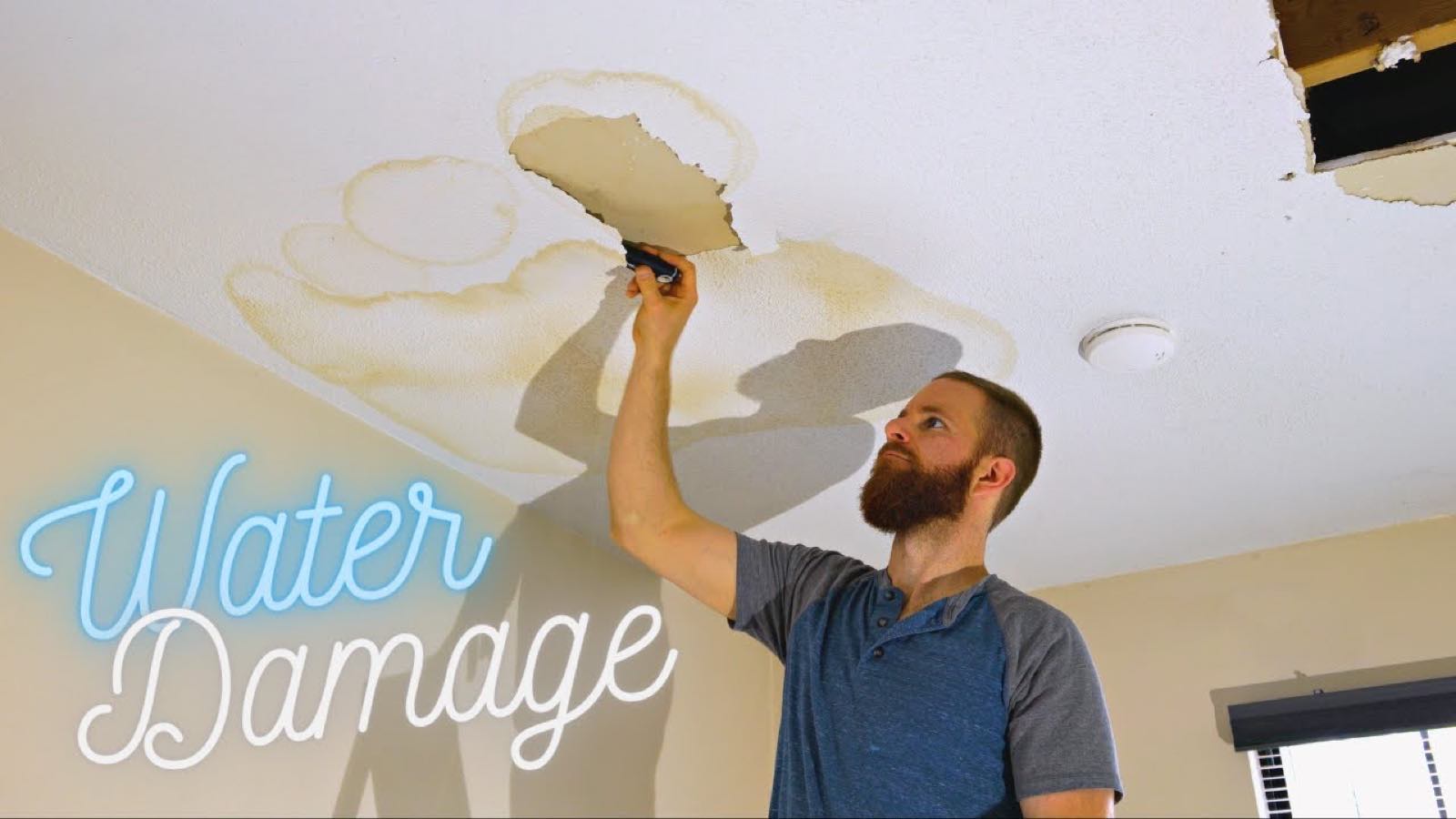
Water Damage Insurance Claims in London: A 2026 Guide
Updated 12 June 2026|9 min read
Most UK home insurance policies cover sudden escape of water, paying to find the leak under trace and access cover and to repair the damage under reinstatement. What is rarely covered is the faulty pipe itself, which insurers treat as maintenance, and gradual leaks neglected over months. You will pay an excess, typically £100–£350. This guide explains how escape-of-water claims work, what trace and access pays for, the documentation insurers want, and where claims succeed or fail.
How home insurance handles escape-of-water claims
Escape of water is one of the most common and most expensive household claims in the UK, and your buildings and contents policy is built to handle it, provided the cause fits the wording.
The principle insurers apply is sudden and accidental versus gradual and avoidable. A pipe that bursts, a tank that fails, a washing machine hose that splits, a shower seal that gives way overnight: these are sudden escapes of water, and they are what the cover exists for. Damage that builds slowly from a long-standing drip you could reasonably have noticed and fixed sits in a grey area, and insurers will challenge it.
Buildings cover pays to repair the fabric of the property: ceilings, walls, flooring, fitted kitchens and bathrooms. Contents cover pays for damaged possessions: carpets that are not fitted, furniture, electronics, belongings. Most households hold both, often combined, and a serious leak usually draws on both at once.
The leak itself, meaning the failed pipe, joint or appliance, is generally not covered, because repairing or replacing a worn component is classed as maintenance, your responsibility as the owner. The policy pays for the consequences of the failure, not the failure.
What trace and access cover actually pays for
Trace and access is the single most useful phrase in an escape-of-water policy, and the one most people have never heard of until they need it.
When water appears but the source is hidden, somewhere in a wall, under a floor, or above a ceiling, someone has to find it, and finding it often means damage in itself: lifting floorboards, opening a ceiling, cutting into tiled boxing, removing a section of wall. Trace and access cover pays for both the investigation and that consequential damage, and crucially it pays to make good afterwards: relaying the floor, reboarding the ceiling, re-tiling the boxing.
This matters because locating a concealed leak can cost £300–£1,500 before a single repair begins. Most buildings policies include trace and access, but the cover is capped, commonly at £5,000–£10,000, and a small number of cheaper policies exclude it or limit it severely, so it is worth checking your schedule now rather than mid-crisis.
What trace and access does not pay for is the same exclusion as everywhere else: the actual repair to the leaking pipe or fitting, which remains maintenance. It pays to find it and to repair the building around it, not to mend the pipe.
Element
Typically covered?
Notes
Finding a hidden leak
Yes
Under trace and access, capped £5,000–£10,000
Damage caused getting to the leak
Yes
Lifting floors, opening ceilings, cutting boxing
Making good after access
Yes
Relaying floor, reboarding, re-tiling
Reinstating water-damaged areas
Yes
Buildings cover, for sudden escapes
The faulty pipe or fitting itself
No
Classed as maintenance
Gradual, long-neglected leaks
Often no
Insurers challenge avoidable damage
Reinstatement: the making-good works after a leak
Once the leak is stopped and the property is dry, reinstatement is the stage that returns your home to its pre-loss condition, and it is the bulk of most escape-of-water claims.
Reinstatement works cover everything the water damaged: cutting out and reboarding ceilings, replastering walls, replacing blown plaster, renewing flooring, repairing or replacing damaged kitchen and bathroom units, electrical making-safe and refitting, and full redecoration of affected rooms. On a flat, it can extend to a neighbour's property below, which is why escape-of-water claims between flats are so common and so tangled.
Two points decide how smoothly reinstatement runs. First, the property must be properly dry before any plastering or decorating, which insurers and loss adjusters understand and will fund the drying for; rushing it produces a failed repair and a second claim. Second, reinstatement is priced on like-for-like, restoring what was there, not upgrading it, so if you want a better kitchen than the one the water ruined, you typically pay the betterment difference yourself.
We scope reinstatement to match the original specification, document it for the insurer, and keep the works sequenced so drying, plastering and decoration happen in the right order, not the convenient one.
The documentation insurers want
A claim succeeds or stalls on its paperwork, and the evidence you gather in the first hours is worth more than anything you can assemble later.
Photograph everything before any work starts: the damage, the source once found, water on the floor, ruined possessions, the failed component. Date-stamped images are the backbone of a claim. Keep the failed part when the plumber removes it, because a loss adjuster may want to see the split pipe or perished seal that proves the escape was sudden rather than long-neglected.
Then assemble the supporting documents: an itemised repair quotation broken into trace and access, reinstatement and contents; a plumber's or contractor's report describing the cause; receipts or evidence of value for damaged contents; and a simple written timeline of when you noticed the leak and what you did. The single most damaging thing you can do to your own claim is delay, because an insurer can argue that damage worsened through your inaction, so report promptly and mitigate, meaning stop the water and start drying, even before the claim is settled.
We produce insurer-ready reports and itemised quotations as standard, structured the way adjusters expect, which removes most of the friction before it starts.
Working directly on insurance jobs
There is a practical question behind every escape-of-water claim: who actually does the work, the insurer's nominated contractor or one you choose, and you usually have more control than you think.
Many policies route you to the insurer's approved supplier network by default, which is fine but can be slow and impersonal, with the contractor working to the insurer's brief rather than yours. You are, in most cases, entitled to appoint your own contractor instead, provided the quotation is reasonable and the insurer agrees the scope. This is often the better route when you want continuity, a single accountable firm, or work to a standard above the network minimum.
We work directly on insurance jobs regularly. That means liaising with the loss adjuster, providing the itemised and evidenced quotation they need, agreeing the scope of trace and access and reinstatement, and carrying out the whole job, stopping the leak, drying, plastering and redecorating, under one roof. You deal with us; we deal with the documentation.
The one figure that is always yours to pay is the excess, so it is worth understanding before you commit to a claim at all.
Excess, and when not to claim
Every claim carries an excess, the first slice of any loss that you pay before the insurer contributes, and on water damage it is often two excesses combined.
A standard buildings or contents excess is typically £100–£350. Many policies also carry a separate, higher escape-of-water excess, sometimes £350–£1,000, because water claims are so frequent that insurers price them specifically. Check your schedule for both, because the escape-of-water figure is the one that catches people out.
This matters for small leaks. If stopping a leak and repairing a stained ceiling costs £600, and your combined excess is £500, claiming saves you £100 while putting a claim on your record that will raise next year's premium, often by more than you saved. For damage of that scale, paying directly is usually the rational choice, and it is faster.
Claiming makes clear sense once the loss runs into thousands: a leak that has soaked through multiple rooms, damaged a kitchen, reached a flat below, or required extensive trace and access. The rule of thumb we give clients is simple: if the likely repair is close to or below your total excess, pay directly; if it comfortably exceeds it, claim. For a fixed, itemised quotation that works either way, call us on 020 3006 8834.
Frequently Asked Questions
Does home insurance cover water damage in the UK?
Yes, for sudden and accidental escape of water such as a burst pipe, failed tank or split hose. Buildings cover pays to reinstate the property and contents cover pays for damaged possessions. The faulty pipe itself is excluded as maintenance, and gradual leaks neglected over months are frequently challenged or refused.
What does trace and access cover pay for?
It pays to locate a hidden leak and to repair the damage caused reaching it, such as lifting floors or opening ceilings, then making good afterwards. Finding a concealed leak can cost £300–£1,500, and cover is usually capped at £5,000–£10,000. It does not pay to mend the leaking pipe itself.
What documentation do I need for a water damage claim?
Date-stamped photographs of the damage and source taken before any work, the failed component kept for the adjuster, an itemised repair quotation split into trace and access, reinstatement and contents, a contractor's report on the cause, evidence of value for damaged contents, and a written timeline. Report promptly and start drying to show you mitigated.
How much is the excess on a water damage claim?
Expect a standard excess of £100–£350 plus, on many policies, a separate escape-of-water excess of £350–£1,000. Check both on your schedule. If the repair is close to or below your total excess, paying directly is usually cheaper than claiming and protects your renewal premium.
Can I use my own contractor for an insurance repair?
Usually yes. While insurers default to their approved network, you can normally appoint your own contractor if the quotation is reasonable and the scope is agreed. We work directly on insurance jobs, liaising with the loss adjuster and carrying out tracing, drying, reinstatement and decoration under one roof.