If water is coming through your ceiling, call a plumber or roofer first to find and stop the source, then a plasterer, electrician and decorator to put the ceiling right. A leaking ceiling is rarely one trade's job: a single contractor who holds all four trades is the fastest, cleanest fix. Stopping the leak and making electrics safe costs £220–£440; repairing the ceiling itself runs £150–£2,500 or more. This guide explains exactly who to call, in what order, and how to tell an active leak from an old stain.
Who do I call for a water leak in the ceiling?
The honest answer depends on where the water is coming from, and your first job is to work that out before you dial anyone.
If the leak sits below a bathroom, kitchen or a run of pipework, the source is almost certainly plumbing, so call a plumber or a leak detection specialist. If it appears after heavy rain, near a chimney, or on the top floor, the source is likely the roof, gutters or flashing, so call a roofer. If you genuinely cannot tell, a leak repair specialist who covers both is the safest first call, because they trace the source rather than guess at it.
There is one situation that overrides all of this. If water is dripping through a light fitting or downlight, treat it as an emergency: switch that circuit off at the consumer unit, keep out from underneath, and call for help immediately. Water and electricity in a ceiling void is the one combination worth panicking about.
What almost nobody needs is a decorator first. Painting over an active leak is decorating a problem, and the stain will be back within days.
Plumber or builder? The multi-trade reality
The reason a leaking ceiling confuses people is that no single trade can complete the repair, and the high-street search for a plumber or a builder frames it as an either/or when it is really a sequence.
A proper ceiling-leak repair runs through four trades in order. First, a plumber or roofer finds and stops the leak: a weeping compression joint, a failed shower seal, a split pipe, or cracked flashing above. Nothing else can start until the water stops. Second, an electrician isolates and tests any lighting circuit in the affected ceiling, replacing fittings that water has entered, because a circuit that got wet cannot be trusted until it is proven safe. Third, a plasterer cuts back the damaged ceiling to sound material, reboards where the plasterboard has lost strength, and skims to a flat finish. Fourth, a decorator seals the area with a stain-blocking primer, without which the watermark bleeds through fresh emulsion, and repaints.
So it is neither just a plumber nor just a builder. It is a plumber or roofer to stop it, then a builder's trades to reinstate it, and the order is not negotiable.
Stage
Trade needed
What they do
1. Find and stop the leak
Plumber or roofer
Trace source, repair pipe, joint, seal or flashing
2. Make safe
Electrician
Isolate and test wet circuits, replace affected fittings
3. Dry out
Drying / contractor
Dehumidifiers and air movers, verify with moisture meter
4. Repair the ceiling
Plasterer
Cut out, reboard, skim to a flat finish
5. Finish
Decorator
Stain-block primer, then repaint
The advantage of one contractor managing all of it
Most homeowners facing a leaking ceiling start ringing round: a plumber from one firm, a plasterer from another, then a painter, each visiting, quoting and scheduling independently. The leak gets fixed in week one and the ceiling is still brown in week six, because four separate diaries never line up.
This is the gap our business was built to close. As both a refurbishment contractor and a leak repair specialist, we hold all of these trades in-house, so one phone call covers the entire sequence: leak detection and repair, electrical isolation and testing, drying, reboarding and plastering, and final decoration. One survey, one quote, one point of responsibility.
The benefit is bigger than convenience. The plumber and plasterer working for the same firm agree the cut-out together, so the opening made to reach the pipe is the opening the plasterer planned to board. There is no gap in liability if something is missed, because the same company that stopped the leak guarantees the finish above it. You are never left arbitrating between a plumber who blames the plasterer and a plasterer who blames the plumber.
And because one project manager sequences the trades rather than four strangers, the whole-repair timeline drops from weeks to days once the ceiling is dry. You can see the full scope of this on our leak damage repair service at /services/leak-damage-repair.
Active leak or historic stain? How to tell
Not every brown patch on a ceiling means water is flowing right now, and the difference decides whether you need someone tonight or a decorator next month.
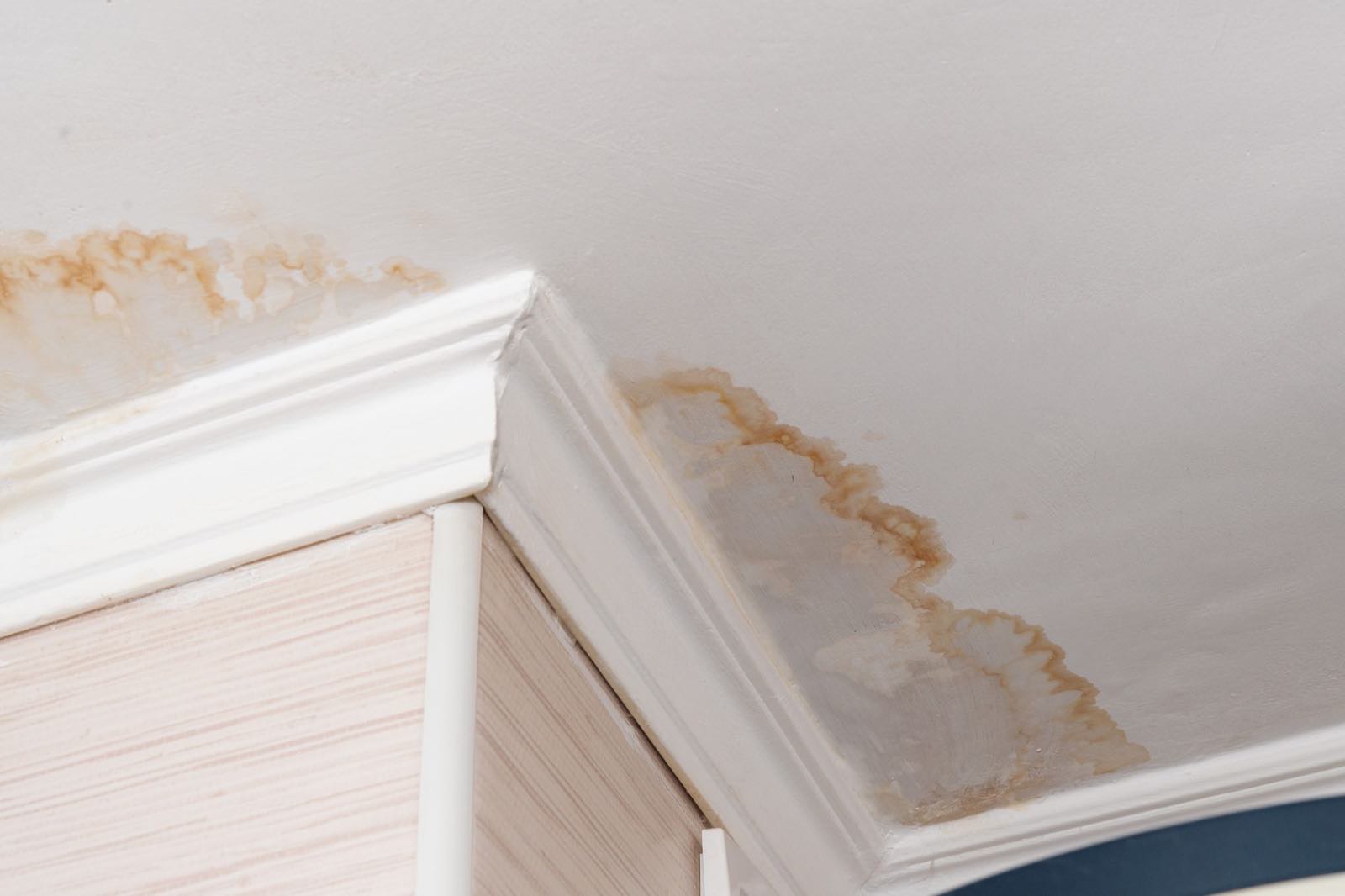
Signs of an active leak: the stain is growing, darkening, or damp to the touch; the ceiling bulges or sags; paint is bubbling; you can hear dripping in the void; or the stain reappears within days of being painted over. A patch that worsens when a particular fixture is used, such as the shower above, or only after rain, both points to the source and confirms it is live. A sagging ceiling holding water is genuinely dangerous, so keep out of the room, pierce nothing, and get a professional in the same day.
Signs of historic damage: the stain is dry, brown-edged and stable, the surrounding plaster is hard, and it has not changed in months. This needs only a stain-block primer and redecoration at £150–£400, the kind of finishing work that sits alongside our painting and decorating service at /services/painting-decorating.
When it is ambiguous, a moisture meter settles it in minutes, and it is the first instrument out of our surveyors' bags. Spend the £150 of a call-out before the £2,000 of a wrong assumption.
What it costs to fix a leaking ceiling
Costs split cleanly into two halves: stopping the leak, and repairing the damage it left, and conflating them is how quotes mislead.
Stopping an accessible leak is the cheaper half. Fixing a leaking pipe in a ceiling typically costs £220–£440, covering opening the ceiling, repairing the joint or pipe section, and testing. If the source is hidden, tracing it first adds £300–£1,500, usually claimable on insurance, which we cover below.
Repairing the ceiling is where the range widens, from £150 to £2,500 or more. A small dry stain, where the leak is already fixed, needs only a stain-block and repaint at £150–£400. Cutting out damaged board, reboarding, skimming and decorating a whole ceiling runs £500–£1,500. Larger ceilings, period lath-and-plaster, electrical work to light fittings, and leaks that ran for weeks push the bill to £1,500–£2,500 and beyond. A full ceiling replacement is £800–£3,000.
The painting is cheap; everything that must happen before the brush comes out is not, which is why the average ceiling water-damage repair we attend lands around £1,550.
Job
Typical cost (2026)
Fix accessible leaking pipe in ceiling
£220 – £440
Trace a hidden leak (often insured)
£300 – £1,500
Minor stain block and repaint
£150 – £400
Cut out, reboard, skim and decorate
£500 – £1,500
Larger or period ceiling repair
£1,500 – £2,500+
Full ceiling replacement
£800 – £3,000
Why you must dry before you repair
Between stopping the leak and repairing the ceiling sits the stage everyone wants to skip: drying. Skip it and the repair fails, guaranteed.
Plasterboard and plaster hold a surprising amount of water. Skim or paint over a damp ceiling and the moisture stays trapped: stains re-emerge through new paint, fresh plaster fails to bond and blows, and in the worst cases mould establishes in the void above. The repair then has to be done a second time, which is the expensive way to do anything.
How long drying takes depends on how much water went in and for how long. A brief escape caught quickly may need only 3–7 days with good ventilation. A leak that ran for weeks can need 2–4 weeks, often assisted by dehumidifiers and air movers that hire at roughly £15–£40 per day per unit.
We verify rather than guess: our surveyors take moisture meter readings before any plastering starts, and only book the plasterer when the structure reads dry. A contractor who reaches for the trowel the day after stopping the leak is setting up the repeat visit.
What to do in the first ten minutes
While you decide who to call, a few quick actions limit the damage and the eventual bill.
If water is coming through or near a light fitting, switch that circuit off at the consumer unit first. Then put a bucket under the worst of the drip and lift or cover anything valuable below. If the ceiling is bulging with trapped water, the instinct is to leave it sealed, but a controlled release is safer than an uncontrolled collapse: only if you are confident, pierce the lowest point of the bulge with a screwdriver to let the water drain into a bucket, which relieves the weight before the whole ceiling lets go. If you are not confident, stay out and wait for a professional.
Upstairs, find the source. If it is plumbing, turn off the stopcock or isolate the relevant supply; if it is a leaking appliance, switch it off and stop using it. Photograph everything before anyone touches it, because those pictures matter for an insurance claim.
Then make the right single call. For most London leaks, that is a contractor who can trace the source, stop it, and reinstate the ceiling under one roof, which is exactly what we do across Central London daily on 020 3006 8834.
Frequently Asked Questions
Who do I call for a water leak coming through the ceiling?
Call a plumber or leak detection specialist if the leak is below a bathroom, kitchen or pipework, or a roofer if it follows rain or sits near the roof. If water is near a light fitting, switch that circuit off and treat it as an emergency. A single leak repair contractor who covers tracing, stopping and reinstatement is the simplest call.
Is a leaking ceiling a plumber's or a builder's job?
Both, in sequence. A plumber or roofer finds and stops the leak, an electrician makes wet circuits safe, a plasterer cuts out and reboards the ceiling, and a decorator stain-blocks and repaints. One contractor holding all four trades completes the whole repair in days rather than the weeks four separate firms take.
How much does it cost to fix a leaking ceiling?
Stopping an accessible leaking pipe costs £220–£440. Repairing the ceiling runs £150–£400 for a minor stain, £500–£1,500 for a cut-out, reboard and redecorate, and £1,500–£2,500+ for larger or period ceilings. A full ceiling replacement is £800–£3,000, and tracing a hidden leak adds £300–£1,500.
How do I know if my ceiling stain is an active leak or old?
An active leak grows, darkens, feels damp, bubbles the paint, or returns within days of painting, and a bulging ceiling is dangerous. A historic stain is dry, brown-edged, hard to the touch and unchanged for months, needing only a £150–£400 stain-block and repaint. A moisture meter confirms it in minutes.
Can one company fix both the leak and the ceiling?
Yes, and it is the fastest route. We hold plumbing, leak detection, electrical, plastering and decorating in-house, so one survey and one quote cover finding the leak, stopping it, drying out, reboarding and redecorating. One point of responsibility means no liability gap between trades and a typical repair completed in days.