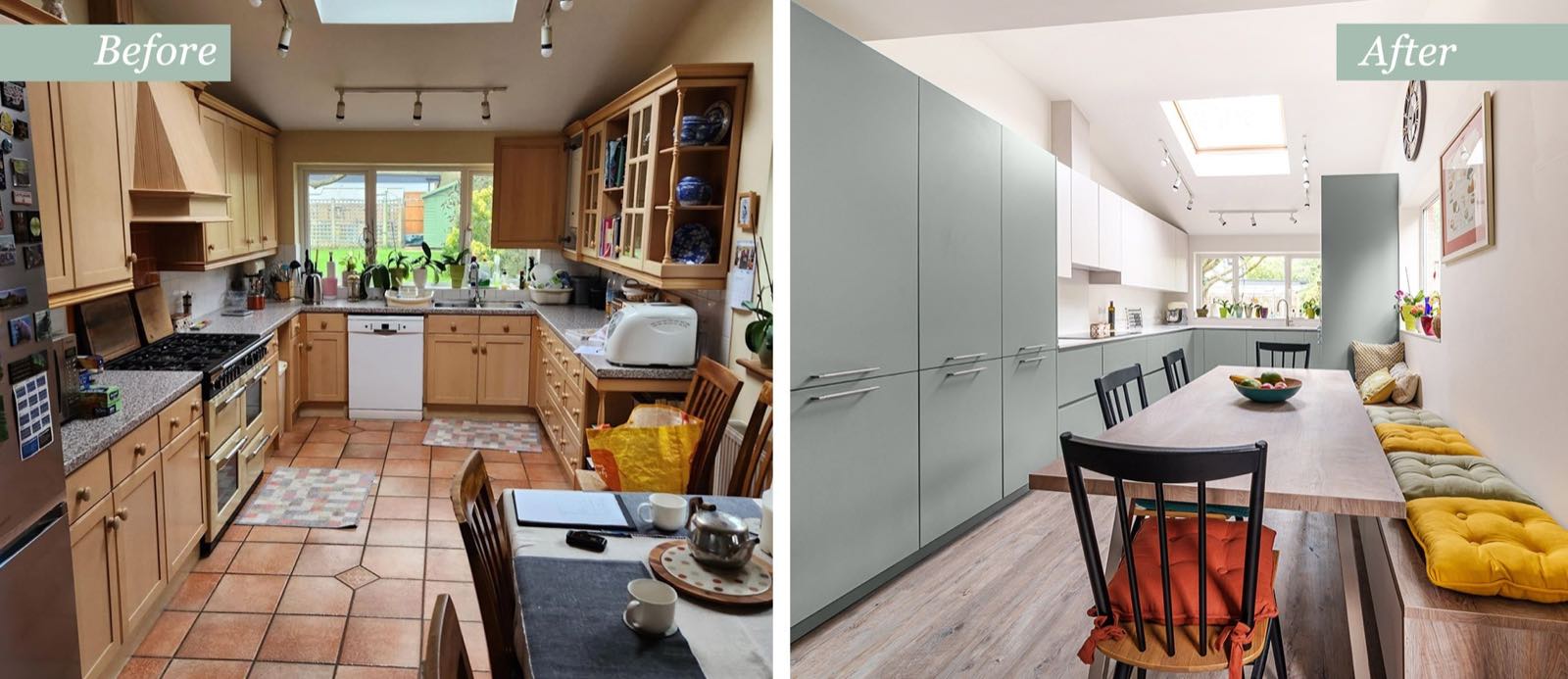
Refurbishment vs Renovation: What's the Difference?
Updated 12 June 2026|7 min read
The terms refurbishment and renovation are used interchangeably, but they describe different levels of work. Refurbishment means restoring and refreshing an existing property, redecorating, updating kitchens and bathrooms, replacing services, without major structural change. Renovation means more extensive work that returns a tired or dilapidated property to good condition, often including structural repair, reconfiguration and full replacement of services. Knowing which you actually need shapes the cost, the timeline and the permissions involved. This guide draws the line clearly and shows how we scope each.
Clear definitions: what each term means
Though the words overlap in everyday speech, in the construction industry they sit on a spectrum of intervention.
Refurbishment is the lighter end. It means improving and modernising a property that is fundamentally sound, refreshing its appearance and updating its components without altering its structure or layout in any major way. A refurbishment typically covers redecoration, new flooring, a new kitchen and bathroom, updated lighting and the replacement of tired but functional services. The building you end up with is the same building, brought up to date.
Renovation sits further along. It means making something new again, returning a property that is worn out, neglected or no longer fit for purpose to a good, functional condition. Renovation usually includes the refurbishment items but adds deeper work: repairing or replacing structural elements, full rewiring and replumbing, replastering throughout, addressing damp, and sometimes reconfiguring the internal layout.
A useful test is this: if the property works and you are updating it, that is refurbishment. If the property has problems that must be put right before it functions properly, that is renovation. Most real projects contain elements of both, which is why the labels matter less than an accurate scope, but the distinction frames the budget and the programme.
How scope differs
The clearest way to see the difference is in what each touches. A refurbishment generally leaves the bones of the building untouched and works on its surfaces and fittings. A renovation goes into the structure and the services.
A refurbishment scope might read: strip out the old kitchen and bathroom, refit both in their existing positions, replace flooring, redecorate throughout, update light fittings, ease and adjust doors, and make good. The existing wiring, plumbing, plaster and structure largely remain, with only localised repair.
A renovation scope is broader: full rewire and new consumer unit, full replumb and new heating, replaster walls and ceilings, repair or replace floor structure where it has failed, treat damp, possibly remove or move walls to reconfigure the layout, and only then fit out and decorate. It often starts with a strip-back to brick and joist in the worst areas.
The overlap is real, and many projects are a refurbishment with a renovation element in one or two rooms, a sound flat that needs only a refresh except for a bathroom where a long leak has rotted the floor. Scoping honestly, room by room, is what prevents a refurbishment budget being asked to carry renovation-sized surprises.
Cost, timeline and disruption compared
Because renovation reaches deeper into a building, it costs more, takes longer and disrupts more, and understanding the gap helps you budget and plan realistically.
On cost, a refurbishment is typically a fraction of a renovation for the same property, because the expensive, labour-intensive work of replacing services and structure is largely avoided. In London terms, a cosmetic refurbishment might run £800–£1,200 per square metre, while a full renovation involving new services and structural work runs £1,800–£3,500 per square metre.
On timeline, refurbishments are quicker because there are fewer trades in sequence and no waiting for structural or first-fix stages. On disruption, a refurbishment can sometimes be done in occupied phases, whereas a renovation involving rewiring, replumbing and replastering usually requires the property to be empty.
The comparison table below sets out the typical differences. Treat it as a guide to the shape of each, not a quote; every property is priced on its own condition.
Factor
Refurbishment
Renovation
Scope
Surfaces, fittings, finishes
Structure, services and finishes
Structural work
Minimal / none
Often included
Services (electrics, plumbing)
Largely retained
Usually replaced
Typical cost (£/sqm, London)
£800 – £1,500
£1,800 – £3,500
Timeline
Shorter
Longer
Property occupied during works
Sometimes possible
Usually vacant
Permissions
Rarely needed
Building control often needed
Which adds more value?
Owners and investors naturally ask which approach returns more, and the honest answer is that it depends entirely on the starting condition of the property.
For a property in poor condition, dated services, damp, a failing layout, renovation adds the most value, because you are removing the defects that suppress its price and unlocking its full potential. A run-down property bought below market value and properly renovated can show a strong uplift, particularly where reconfiguration creates a more saleable layout or an additional bedroom.
For a property already in good structural order, refurbishment usually offers the better return on capital, because you are spending only where the buyer or tenant sees value, kitchens, bathrooms, decoration, flooring, without paying to replace services that are perfectly serviceable. Over-renovating a sound property, ripping out usable wiring and plumbing to chase a complete rebuild, rarely returns the extra spend.
The value-maximising move is to match the level of work to the property's actual condition and to the local ceiling price. There is no point spending renovation money to push a property above what the street will ever pay. Our surveys assess condition objectively and recommend the lighter option whenever it serves you, because padding a scope is not how we work.
How we scope your project
Because the line between refurbishment and renovation is a spectrum, getting the scope right is the most valuable thing we do before any pricing, and it is where projects are won or lost.
We start with a condition survey, room by room and system by system. We test the obvious unknowns, the age and safety of the electrics, the state of the plumbing and heating, evidence of damp, the soundness of floors and ceilings, the condition of windows, so that the scope reflects what the building actually needs rather than an assumption.
From that survey we propose the lightest scope that meets your goals. If a refurbishment will do, we say so. If the survey reveals problems that make a refurbishment a false economy, a rewire that is unsafe to leave, a leak that has rotted a floor, we explain exactly why and price the renovation element separately so you can see the trade-off.
The deliverable is a fully itemised scope and quotation with no provisional sums hiding the hard decisions, so you know precisely which parts are refresh and which are repair. Whether your project is a refurbishment, a renovation or a deliberate blend of both, call us on 020 3006 8834 for a survey and an honest scope.
Common scenarios and which you need
It helps to map the labels onto the situations we see most often across London, because most owners recognise their property in one of a handful of cases.
A flat bought in livable condition that simply feels dated, tired kitchen, old bathroom, magnolia walls, but with sound wiring and plumbing, needs a refurbishment. Refit the wet rooms, redecorate, replace flooring, and you are done.
A period house that has not been touched in thirty years, with original wiring, a failing boiler, blown plaster and a layout that no longer suits modern living, needs a renovation. The services and plaster must be replaced before any finish is worth applying.
A buy-to-let between tenancies usually needs a refurbishment: redecorate, refresh flooring, service the compliance items and turn it around fast. A probate property bought cheaply to add value is typically a renovation, where the discount reflects the work required.
And a great many projects are a refurbishment with one renovation room: the sound home with a single bathroom destroyed by a long-running leak. Recognising which case you are in is the first step to a budget that holds, and an experienced contractor will place you accurately at the first visit.
Frequently Asked Questions
What is the difference between refurbishment and renovation?
Refurbishment means refreshing and updating a sound property, redecoration, new kitchen and bathroom, flooring, without major structural change. Renovation is deeper work that returns a worn or dilapidated property to good condition, typically including structural repair, full new services and replastering. Refurbishment improves; renovation makes good.
Is renovation more expensive than refurbishment?
Yes, usually significantly. Renovation involves replacing services and repairing structure, the most labour-intensive work, so it typically runs £1,800–£3,500 per square metre in London against £800–£1,500 for a cosmetic refurbishment. Renovation also takes longer and usually needs the property vacant.
Which adds more value, refurbishment or renovation?
It depends on the property's condition. For a run-down property with dated services or a poor layout, renovation unlocks the most value. For a property already in sound order, refurbishment gives the better return because you spend only where buyers and tenants see value, without replacing serviceable systems.
Can a property be refurbished while occupied?
A cosmetic refurbishment can sometimes be done in occupied phases, room by room. A renovation involving rewiring, replumbing and replastering usually requires the property to be empty, both for safety and because the disruption, dust and loss of services make occupation impractical.
Do I need refurbishment or renovation for my project?
If the property functions and you are updating its appearance and fittings, that is refurbishment. If it has defects, unsafe wiring, damp, failed structure, that must be put right before it works properly, that is renovation. A condition survey identifies which, and many projects are a refurbishment with one or two renovation rooms.