Bathroom Refurbishment Costs in London: 2026 Price Guide
Updated 12 June 2026|8 min read
A full bathroom refurbishment in London costs £8,000–£12,000 for a standard specification, £12,000–£18,000 for mid-range and £18,000–£25,000 or more for high-end work in 2026. Those figures cover everything: strip-out, plumbing and electrics, waterproofing, tiling, sanitaryware and decoration. Most projects take two to four weeks on site. This guide breaks the budget down stage by stage, explains what pushes costs up, and why cheap bathroom fitting is the most expensive option of all.
How much does a bathroom refurbishment cost in London in 2026?
Bathroom quotes in London cluster into three tiers, and the differences are about specification and complexity rather than honesty; a £9,000 bathroom and a £24,000 bathroom can both be fairly priced.
Standard (£8,000–£12,000) replaces everything like-for-like: new bath or shower, basin, WC, quality ceramic tiles to wet areas, standard brassware and a fitted vanity unit. Layout stays as it is.
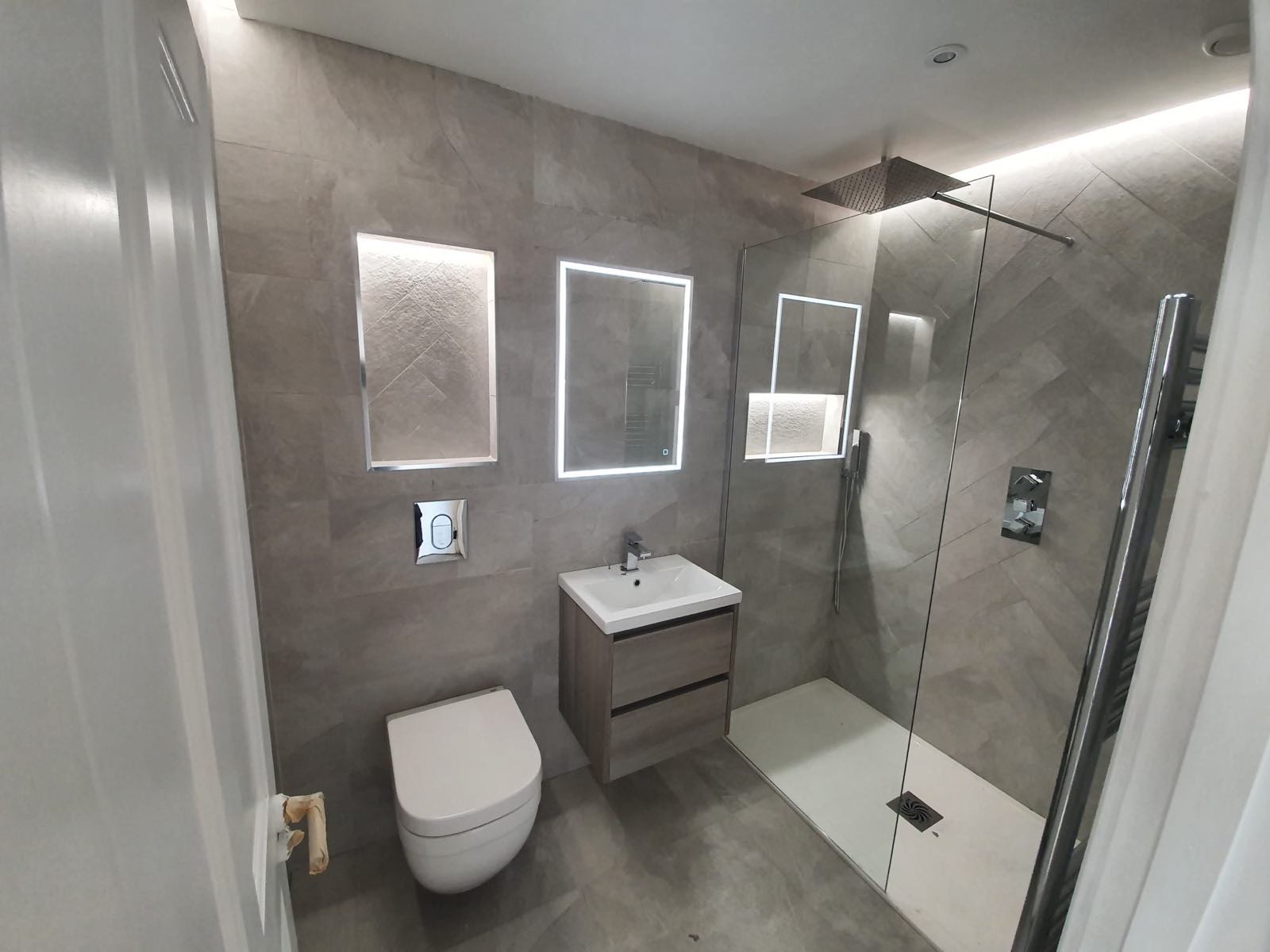
Mid-range (£12,000–£18,000) is the most popular tier across our London projects. It adds full wall tiling, larger-format porcelain, a walk-in shower with a quality enclosure, wall-hung sanitaryware, better brassware, an illuminated mirror cabinet and often electric underfloor heating.
High-end (£18,000–£25,000+) covers wetroom conversions, full layout changes, natural stone or large-format porcelain slabs, concealed cisterns and frames, designer brassware, bespoke vanities and feature lighting. Above £25,000 you are into marble, custom glasswork and architectural joinery, and the ceiling is whatever the specification demands.
The table summarises the tiers; the rest of this guide shows where the money actually goes.
Tier
Cost (2026)
Typical scope
Standard
£8,000 – £12,000
Like-for-like refit, ceramic tiles, standard brassware
Wetroom, layout changes, stone or slab finishes, designer fittings
Where the money goes: stage-by-stage cost breakdown
A bathroom is a small room that contains every trade, which is why it costs more per square metre than any other space in the house. Here is how a typical mid-range London bathroom budget divides.
Strip-out and waste removal: £500–£1,000 to remove the old suite, tiles and flooring back to bare walls and floor. First-fix plumbing and electrics: £1,500–£3,500 to run new hot, cold and waste pipework, install shower valves, wire fans, lighting circuits, shaver points and underfloor heating mats.
Tanking and waterproofing: £400–£900 for proper waterproof membranes to wet areas; the cheapest line in the budget and the most important. Tiling: £80–£150 per square metre for labour in London, so a fully tiled bathroom carries £1,500–£3,500 of tiling labour before the tiles themselves, which run from £25 per square metre for ceramic to £150+ for porcelain slabs and stone.
Sanitaryware and brassware: £1,500–£5,000 at mid-range. Second fix and finishing, fitting the suite, glass, accessories, decoration and silicone, completes the job at £1,500–£3,000.
Labour is roughly 55–65% of a London bathroom budget, which is why the same shopping list of fittings yields very different quotes in different cities.
What drives bathroom costs up
Three decisions, made early, separate a £12,000 bathroom from a £22,000 one, and none of them is the tap brand.
Moving the soil stack or the WC position is the biggest. The soil pipe dictates where the WC can sit; moving it means new cast or plastic stack runs, floor openings, sometimes structural notching, and in flats it usually triggers freeholder consent. Budget £1,500–£4,000 for significant soil and waste rerouting, and ask honestly whether the new layout is worth it.
Wetrooms are the second. A true wetroom needs a formed and tanked floor with falls to a drain, which means more first-fix work, more waterproofing and more skilled tiling. Add £2,000–£5,000 over an equivalent shower enclosure, and treat the waterproofing specification as non-negotiable.
Third, finishes with handling cost: underfloor heating adds £800–£1,800 installed; marble and large-format porcelain slabs need two-person handling, specialist adhesives, mitred edges and flawless setting-out, adding £2,000–£6,000 over standard-format tiling.
None of these is a wrong choice; we build all three regularly. They are simply the lines to interrogate when a quote surprises you in either direction.
Tanking and waterproofing: the £600 that protects £20,000
If we could change one habit in London bathroom fitting, it would be this: nobody should ever skip tanking, and yet on the leak repair side of our business we see the consequences of skipped tanking every single week.
Tile and grout are not waterproof. Grout is porous, silicone fails over time, and movement in the building opens hairline paths for water. The waterproof layer in a properly built bathroom is what sits behind the tiles: a tanking membrane, either a liquid-applied coating or sheet system, dressed into the corners, around the shower valve and over the floor junction.
Tanking a shower area and wet zones costs £400–£900 in materials and labour. Compare that with what its absence costs: a slow leak through an untanked shower wall typically runs unseen for months, rotting joists, staining the ceiling below and, in flats, damaging the neighbour's property, with repair bills of £2,000–£10,000 and an insurance claim that becomes strained when the cause is found to be poor workmanship.
Every bathroom we build is tanked to wet areas as standard, photographed before tiling, and the photographs handed to the client. Ask any prospective fitter to commit to the same; their reaction tells you everything.
How long does a bathroom refurbishment take?
A full London bathroom refurbishment takes two to four weeks on site, and a fitter promising one week is telling you which corners they intend to cut.
A realistic mid-range programme runs like this. Days 1–2: strip-out, waste away, and exploratory checks of the floor and walls now exposed. Days 3–6: first-fix plumbing and electrics, any boarding and floor preparation. Days 7–8: tanking, with curing time honoured between coats. Days 9–14: tiling, the longest stage, because setting-out, cutting and grouting a fully tiled room properly cannot be rushed. Days 15–17: second-fix, fitting the suite, brassware, glass and accessories. Days 18–20: decoration, silicone, sealing and snagging.
Add time for wetroom floor formation, underfloor heating (the mats are quick, but adhesive and screed cure times are not), and layout changes. Add waiting time too if anything is on back order; we pre-order every item before strip-out so the programme never waits on a delivery.
During the works you will be without that bathroom entirely, so for one-bathroom homes we sequence the messiest work early and aim to have a working WC back as soon as possible.
Why cheap bathroom fitting causes leaks
Half of our company repairs leak damage; the other half builds bathrooms. The first half exists substantially because of how the cheapest examples of the second half are built, and that gives us an unusual perspective on budget bathroom quotes.
The failures we trace back to cheap fitting are remarkably consistent. Showers installed without tanking, leaking through grout lines into the floor below. Waste pipes laid without fall, or push-fit joints buried inaccessibly without being tested under pressure. Shower trays bedded on nothing, flexing until the silicone splits. Flexible hoses kinked behind bath panels. Wall-hung WC frames fixed into crumbling plaster rather than the structure.
None of these failures shows on handover day. Each shows six months to three years later, as a stain on the ceiling below, and by then the £3,000 saved on the cheap quote has become a £2,000–£10,000 repair, plus a second bathroom refit to do the job properly.
This is why London Refurbishments builds bathrooms the way our leak engineers wish every bathroom were built: tanked, pressure-tested before tiling, photographed at every concealed stage, and guaranteed in writing. A bathroom should be a 20-year asset, not a slow-motion insurance claim.
Getting the best value from your bathroom budget
Value in a bathroom is not the lowest quote; it is the most bathroom per pound that still protects the fabric of your home. After hundreds of London bathrooms, here is where we tell clients to spend and where to save.
Spend on what is buried: pipework, tanking, shower valves and the quality of the tiling labour. These are the items you cannot change later without ripping the room out, and they determine whether the bathroom lasts twenty years or leaks in two.
Save on what swaps: taps, towel rails, mirrors, accessories and even the vanity unit can all be upgraded later in a weekend. Mid-priced sanitaryware from established brands performs almost identically to designer equivalents at a fraction of the price; you are mostly buying the shape.
Keep the layout if you can; as covered above, the existing soil stack position is worth thousands. Choose porcelain over natural stone in showers, since it is cheaper, harder-wearing and needs no sealing. And fix the complete specification before strip-out, because the £200 of decisions made under time pressure mid-project reliably cost £2,000.
For a fixed, itemised quotation on your bathroom, our surveyors cover all of Central London; call 020 3006 8834.
Frequently Asked Questions
How much does a new bathroom cost in London in 2026?
A full bathroom refurbishment in London costs £8,000–£12,000 at a standard specification, £12,000–£18,000 for mid-range and £18,000–£25,000+ for high-end work, including strip-out, plumbing, electrics, waterproofing, tiling, sanitaryware and decoration.
How long does a bathroom refurbishment take?
Two to four weeks on site for a full refurbishment. Strip-out and first fix take about a week, tiling roughly a week, and second fix plus decoration the remainder. Wetrooms, underfloor heating and layout changes push towards the four-week end.
How much extra does a wetroom cost?
A wetroom conversion adds £2,000–£5,000 over an equivalent walk-in shower, covering the formed floor with falls to the drain, full tanking and the additional skilled tiling. A complete mid-range wetroom bathroom in London typically lands at £15,000–£23,000.
What does tanking a bathroom cost, and do I need it?
Tanking wet areas costs £400–£900 and is essential, not optional. Tile and grout are not waterproof, and untanked showers cause concealed leaks with repair bills of £2,000–£10,000. Ask any fitter to photograph the tanking before tiling; reputable ones already do.
How much does it cost to move a toilet or soil stack?
Rerouting soil and waste pipework to move a WC costs £1,500–£4,000 depending on the run and floor construction, and in flats it usually needs freeholder consent. Keeping the WC within a metre of the existing stack avoids most of that cost.